文 | 锌刻度,作者 |李觐麟,编辑 | 陈邓新新一届准大学生即将入校,一年一度的升学购机季如期而至。往年这个时节,5000元档位是准大学生选购笔记本的黄金区间,轻薄本、入门游戏本选择丰富,家长和学生可以在众多机型之间从容比对。
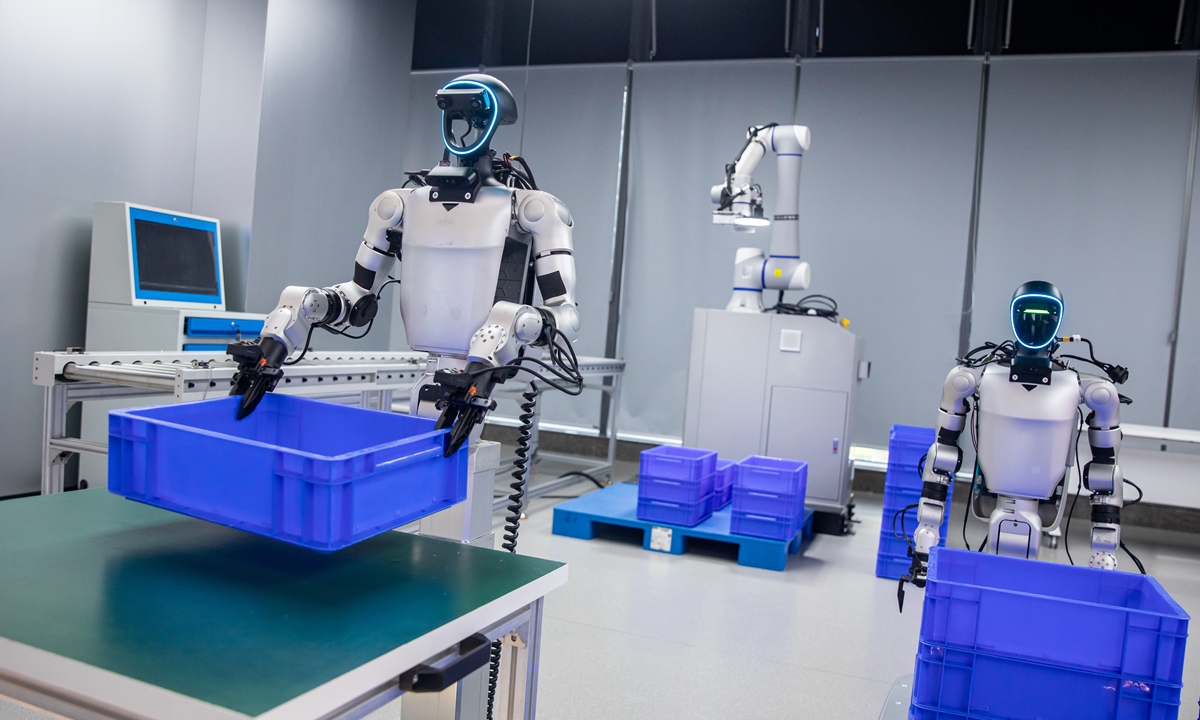
Robots conduct logistics and warehousing scenario training at an embodied intelligence exhibition center in Hangzhou, East China's Zhejiang Province, on June 11, 2026. Photo: VCG
Consumer-oriented embodied AI model developer Noin Intelligence announced a 500-million-yuan ($74.1 million) Angel++ funding round on Monday, the company said in a statement, marking another major capital inflow into embodied AI models as investors turn their attention toward the "brains" behind robots.
According to the statement, the company plans to channel the funding into developing more generalizable embodied AI models, advancing iterations of its GLOW generative model, and accelerating product validation and mass production.
Industry experts noted that a broader shift in the robotics race, with competition moving beyond hardware performance toward the development of core intelligence capabilities. While hardware forms the physical foundation of robots, embodied AI models determine their ability to perceive, learn, reason and adapt in real-world environments, making them a key factor in unlocking future opportunities.
The funding momentum extends beyond Noin Intelligence, with several other companies recently securing major financing rounds that are largely focused on advancing their AI models.
On August 3, Wuxi-based embodied intelligence company DISCOVER Robotics secured a $100 million Angel+ funding round, shortly after completing its initial angel financing of more than $100 million, according to Wuxi Fabu, the official WeChat account of the local government.
The company later introduced ORION, a hierarchical embodied intelligence foundation model, as well as LOOP, a virtual-real hybrid data closed-loop system, and DISCOVERSE, a high-fidelity simulator. The solutions are designed to tackle two major challenges facing the embodied intelligence — data scarcity and limited generalization — and accelerate the development of more capable AI systems, according to Wuxi Fabu.
In addition, according to industry media reports on August 3, Ant Lingbo, Ant Group's embodied intelligence subsidiary, has launched its first round of financing, seeking to raise 1.5 billion yuan.
The company aims to complete a second funding round by the end of this year. The company later confirmed to media that it was in discussions with investors, saying that as a core initiative of Ant Group's embodied intelligence strategy, it will continue to focus on developing general-purpose robotic brains, increase investment in embodied-native technology pathways, and accelerate industrial deployment.
The shift is also reflected in the fundraising priorities of publicly listed candidates.
Notably, Unitree Robotics, which has recently drawn widespread attention from the capital market, officially opened IPO subscriptions on Monday. According to its prospectus registration document disclosed by the Shanghai Stock Exchange on June 2, the company plans to raise 4.202 billion yuan through the IPO, with nearly half of the proceeds earmarked for its intelligent robot model R&D project.
Of the total proceeds, 2.02 billion yuan will be allocated to the intelligent robot model development project, significantly exceeding the 1.11 billion yuan planned for robot body R&D, highlighting the company's focus on developing the AI capabilities that power robots.
Wang Peng, an associate research fellow at the Beijing Academy of Social Sciences, said the latest financing trend shows that capital is reassessing where the core value of robotics lies. Investors are increasingly moving beyond robot hardware itself and treating embodied AI models and robotic "brains" as high-value assets, with capital flowing more toward software, algorithms and intelligence capabilities, he told the Global Times on Monday.
The valuation framework is also being reshaped, with investors paying greater attention to real-world deployment, customer adoption and repeat demand rather than hardware specifications or corporate narratives alone. Whether robots can operate reliably in real application scenarios has become a key benchmark for investment decisions, Wang said.
He added that increased investment in embodied AI models and generative world models could help address the structural gap between general-purpose AI models and physical-world interaction by expanding the supply of real-world interaction data. Capital is also increasingly favoring companies aligned with the country's long-term industrial priorities and emerging industry development plans, he said.
According to data from IT industry research platform ITjuzi.com, financing in China's embodied intelligence sector totaled 93.5 billion yuan in the first half of 2026, surpassing 90 billion yuan and marking a fivefold increase from the same period in 2025. The number of financing deals reached 322, up 137 percent year-on-year.
As China enters the first year of its 15th Five-Year Plan period (2026-30), policy priorities are placing greater emphasis on developing emerging industries, with the country accelerating AI development and promoting its integration with various sectors, Chinese experts noted. Meanwhile, as global AI development enters a new stage driven by broader applications and deeper industry integration, embodied intelligence is expected to unlock significant growth potential.
Driven by policy support and rapid industry evolution, the nation's upstream and downstream segments of the AI industry have gained momentum, achieving notable progress.
According to a Bloomberg's Monday report, China's humanoid robot makers commanded more than 97 percent of global shipments in the first half of 2026, according to new industry data affirming the country's early lead against US rivals in the burgeoning field.
Meanwhile, global humanoid robot shipments totaled roughly 19,100 units in the first half of 2026, more than triple the 5,100 units shipped in the same period last year, according to data from Smart Analytics Global. Data further noted the California-based research firm expects shipments to rise to around 60,000 units this year and reach half a million by 2030.
。但2026年的暑期市场,呈现出完全不一样的图景。苹果MacBook Air一页涨价1500元起,联想拯救者R7000P一个月涨价超1000元,NVIDIA RTX 5090显卡从约2万元飙升至3.5万元……无论是走进线下数码卖场,还是打开电商选购页面,曾经热闹的5000元主流价位段正在快速萎缩。

二 | 同配置笔记本较去年普遍上涨800元~1500元,想要拿到16GB内存+ 1TB固态的主流配置,新机门槛已经抬升至6000元以上。不少消费者陷入两难:要么压缩配置,接受性能降级,勉强凑合用两三年;要么打破原有预算,多掏一千元甚至两千元,才能买到够用的机器。

三 | 另一边,行业头部企业也释放出了更加冷峻的信号。包括苹果高管在内的产业大佬公开表态,硬件涨价并非短期市场炒作,而将成为行业“新常态”。当廉价PC时代渐行渐远,电脑市场将步入怎样的全新发展阶段?从内存条到产业链的“蝴蝶效应”如果用一个词形容2026年的存储芯片市场,可能很多业内人都会提到“荒年”。并不是没有米,而是米全被大厂包圆了。从微软、谷歌、亚马逊到国内的字节跳动、腾讯、阿里,每家都在拼命搭建AI训练集群,而这些“超级大脑”对内存的饕餮胃口,远超所有人的预估。

四 | 一台顶级的AI服务器,动辄需要数TB内存,其内存消耗量是普通云服务器的8到10倍。去年末,三星、SK海力士与美光相继披露,其下一代高带宽内存HBM的2026年产能已基本被预订完毕,消费级计算机内存的投片量几乎被压至历史最低。

五 | 于是,一轮离谱的内存涨价潮来袭,DDR4 16GB内存条现货价格在一年内暴涨340%,从2025年8月的不足200元飙升至2026年7月的近900元;32GB DDR5套装从900元窜至接近4000元,涨幅超过300%。
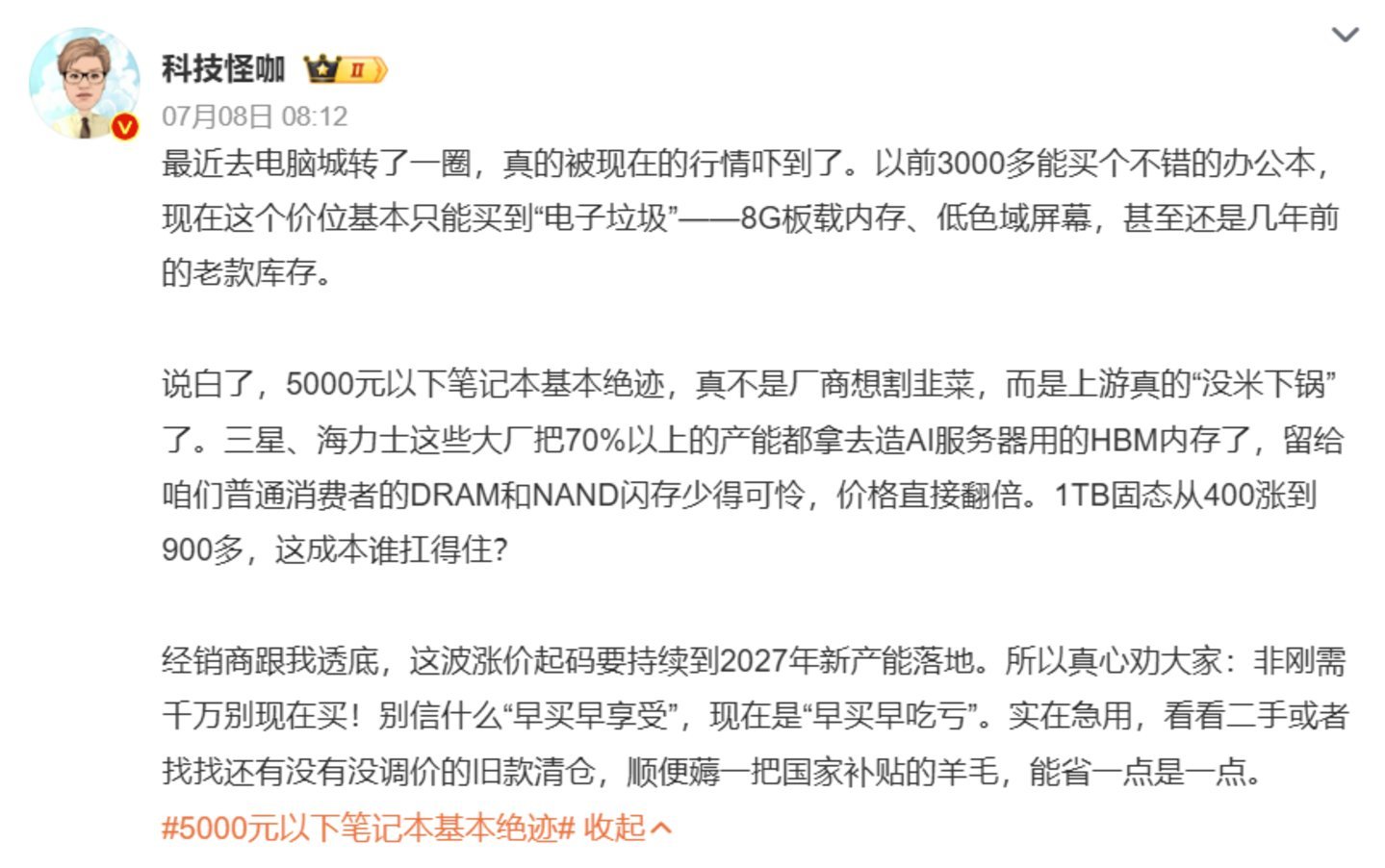
科技大V谈电脑涨价潮在深圳华强北做了十二年内存批发生意的老周,对着满墙的价签苦笑:“我做这行这么久,从没见过这么邪门的行情。以前是年底涨一波,年后跌回来,现在是一天一个价,上游给什么价我就卖什么价,根本不敢囤货。”他指着柜台里孤零零的几条内存说:“就这几条,还是我托关系从香港渠道抢来的,搁去年这时候,我库里少说几百条。”体现在消费市场上的震荡更加明显。8月初,张驰带着刚考上大学的儿子,带着被妻子框死在“绝不能超过一万”的预算,从戴尔看到惠普,从惠普看到联想,每进一家店,儿子眼睛发光地看着高配款,张驰则感觉有些犯难。最后在一家联想店里,儿子看中了13999元的拯救者Y7000P,张驰原本想劝儿子先买个八九千元的笔记本电脑,等考上研究生再换更好的。但在儿子的几番请求下,他还是咬牙买下了这台电脑,随后给妻子的微信发去“超了四千,我下个月的奖金来补”。今年考上一所二本院校土木工程专业的赵孟珂则想法不同,在得知心仪的机械革命游戏本比去年贵了将近2000元后,他直接换了思路,当晚他买了一台二手ThinkPad T14,再额外买了个16G内存。“还应该勉强够写论文、画CAD、玩游戏什么的,等后面电脑价格低一点再考虑换个配置高的吧,现在确实不是入手的好时候。”考虑到家庭条件的局限,赵孟珂觉得没有必要硬上高配电脑。赵孟珂们的选择,正在汇聚成一股暗流。

六 | 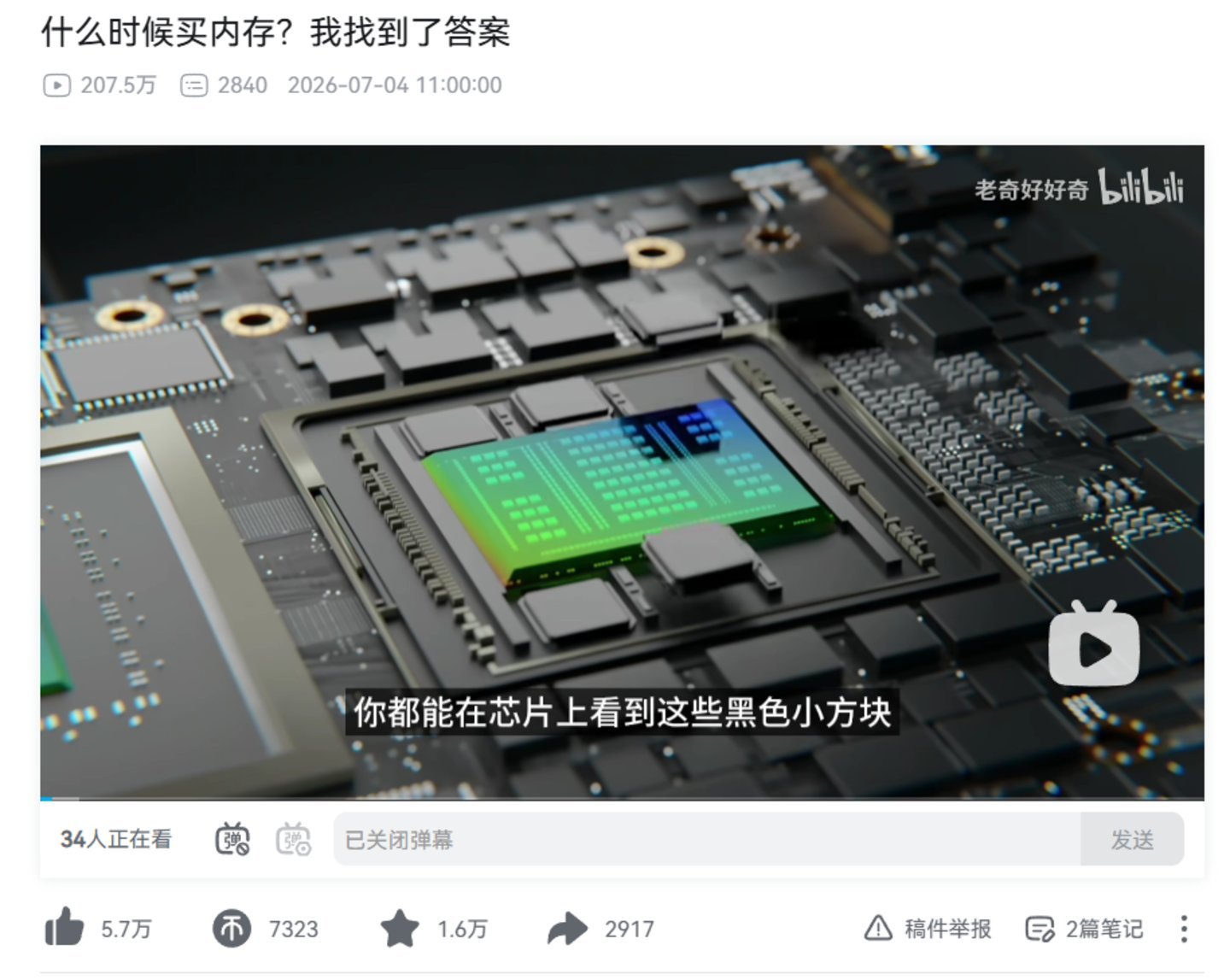 不少数码博主都建议“先别买了”数据显示,今年前两个月国内笔记本电脑线上零售销量为94.7万台,同比大幅下降40.5%,销售额为59.9亿元,降幅同样达到40.5%,创下近年少见的开年跌幅。与此同时,2026年4月下旬起,大量搭载英特尔第十二代酷睿处理器的戴尔笔记本集中出现在闲鱼、转转等主流二手交易平台,典型机型如Latitude 7430售价普遍在1600至2000元区间,部分设备仍处于保修期内。

七 | 这一现象覆盖商用本、消费级轻薄本及游戏本多个产品线,且与当前内存、存储芯片价格暴涨形成鲜明对比,引发市场关注。更有趣的是,原本被视为“老古董”的多款往年高端机型,因为内存和硬盘可以自由升级,反而成为性价比最高的“香饽饽”。有网友调侃道:“以前觉得买二手丢人,现在觉得买新机才是在交‘焦虑税’。”暂不可逆的涨价潮,需要新的平衡点在电脑集体涨价潮面前,市场上出现了诡异一幕:曾经兵家必争的5000元价位段,如今只剩下一些缩水到极致的“壳子机”:8GB内存、256GB低速硬盘、低色域TN屏,甚至连基本的Windows 11流畅运行都磕磕绊绊。真正能流畅打游戏、跑代码、剪视频的电脑,起步价已经悄然站上了7500元的台阶。从以往市场波动来看,内存涨价通常持续3-6个月便会回落,但这一次,机构和分析师们几乎一致认为故事不同了。中信证券研报表示,Agent AI时代以存力为核心,驱动存储行业迎长周期范式转移。

八 | 供需方面,AI推理带动Token消耗剧增,KV Cache随之线性激增,需求爆发与原厂扩产错位致使缺货常态化,预计供不应求将持续至2027年,涨价贯穿2026全年。这意味着“等双十一降价”“等开学季促销”的旧经验已经失效,厂商或许不是不想促销,是没有降价的利润空间。有消费者已经在走遍几家数码店之后发现,开学季活动赠送的礼品无非就是电脑包、鼠标等,高折扣或是高价值礼品已经不符合市场行情了。

九 |  面对暂时不可逆的涨价潮,消费者并非束手无策。“如果是人文社科、经管类专业,日常只需Office三件套和浏览器,完全不必追求高性能独显。等未来内存价格松动或攒够零花钱,再自行加装。”从事二手笔记本售卖的许鹏飞告诉锌刻度,“现阶段,如果你的孩子手头还有一台三四年前的笔记本,先别急着淘汰。

十 | 花点小钱把内存升级到16GB,把机械硬盘换成固态,再加一个外接显示器,绝大多数学习场景完全够用。电脑是工具,不是面子。

十一 | ”与此同时,市场存在一种观点:只要存储大厂持续扩产,价格很快就会回落。但HBM 的建设、产线改造需要周期,即便新增产能落地,AI 服务器的订单已经提前锁定,新增产能会优先满足算力需求,消费级硬件的供给缺口修复,会排在优先级的后端。当然,这不代表PC行业会彻底抛弃大众市场。技嘉、华硕、联想、戴尔等厂商,依然需要维护庞大的消费用户基本盘。

十二 | 后续行业可能会看到更多折中方案,例如可升级内存硬盘的机型占比提升,让用户可以前期买基础版本,未来降价后自行扩容。至于目前二手电脑市场迎来的热度同样需要客观看待,二手市场并非长期的价格洼地,它同样会被新机涨价传导。新机涨价带动二手设备的估值抬升,往年的热门机型二手成交价同步上浮5001000元,并非遍地捡漏。同时二手市场鱼龙混杂,翻新、电池老化、暗病隐患层出不穷,普通消费者缺乏鉴别能力。2026年这场由AI算力浪潮间接引发的PC涨价潮,由人工智能引发的算力饥渴所驱动,由存储芯片的产能再分配所传导,最终落在每一个普通家庭的钱包上。算力大时代向前狂奔,而普通消费者的数字生活,也正在这股浪潮当中,重新寻找属于自己的平衡点。